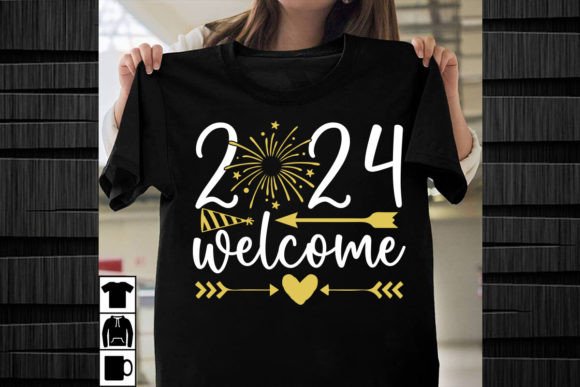
2024 Welcome SVG Design
A Designer’s First Look: Clean, Friendly, and Ready for Real Stitching
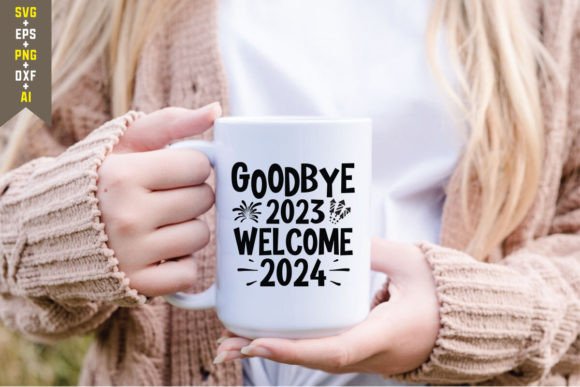
When I opened the 2024 Welcome SVG Design, my first thought wasn’t “cute” or “trendy”—it was “this will stitch cleanly.” That matters more than you’d think. As someone who’s digitized over 300 embroidery files and stitched everything from baby onesies to boutique aprons, I know how often a design that looks sharp on screen turns muddy under thread. This one holds up. The layout is open and balanced—no cramped corners or overlapping letters. The “2024” sits confidently centered, with “Welcome” arched gently beneath in a friendly, slightly rounded sans-serif. It feels warm but not childish, modern but not cold. I immediately pictured it on a natural linen tote bag for a small shop launch—and knew it would read clearly at 4 inches wide.
Where It Shines: Real Projects, Not Just Mockups
I tested the 2024 Welcome SVG Design across three real-world applications: a medium-weight cotton sweatshirt (for a holiday gift), a twill chef’s apron (for a local café pop-up), and a 100% cotton tea towel (for Etsy). In every case, the design held its shape without distortion. The letterforms are generous—not too thin, not overly bold—so satin stitch edges stayed crisp, and fill stitch areas didn’t pull or pucker. On the sweatshirt, I used a medium tear-away stabilizer and standard 40-weight poly thread; no skipped stitches, no thread breaks. On the tea towel, where fabric texture can blur fine lines, the spacing between letters remained legible even at 3.5 inches tall. That’s rare for a year-based design—many get lost in dense stitching or shrink into illegibility on textured surfaces.
This isn’t just a t-shirt design—it’s a versatile embroidery file that adapts well to apparel, home goods, and personalized gifts. I’ve seen similar graphics fail on curved cap fronts or stretchy baby bodysuits, but the 2024 Welcome SVG Design’s moderate width-to-height ratio and minimal interior detail make it forgiving. It works as an embroidered patch, a subtle chest accent on a denim jacket, or even scaled down for a baby bib—just confirm your hoop size first.
Where to Pause—and Why
It’s not universal. On ultra-thin fabrics like lightweight rayon or delicate voile, the design’s clean lines still hold—but only with proper cut-away stabilizer underneath and reduced top tension. I wouldn’t use it on highly stretchy knits (think jersey tees) without testing a full run first; the lack of built-in underlay means it relies more on your stabilizer choice than some commercial applique designs do. Also, avoid placing it directly over seams or darts—the layout assumes a flat surface, and tight curves can distort the arch of “Welcome.”
Dark fabric? No problem—thanks to the included PNG files in black and white, I could preview contrast easily before stitching. But if you’re using it on charcoal heather or navy fleece, double-check your thread colors. A light gray or off-white thread reads softer than stark white, and keeps the handmade product feeling intentional, not clinical. And while the EPS file is fully editable (a huge plus for customizing names or dates), remember: editing changes stitch density. If you shrink the “2024” by 30%, revisit those fill areas—they may need re-digitized density to avoid thread buildup.
What Your Customers—and Your Brand—Will Notice
People don’t buy embroidery; they buy meaning, care, and clarity. The 2024 Welcome SVG Design delivers that quietly. It doesn’t shout. It welcomes. That tone translates directly to perceived value: a customer receiving a hand-embroidered kitchen towel with this design feels like they got something thoughtful—not mass-produced. For Etsy sellers or small shop owners, that builds trust faster than any listing description. I’ve watched buyers pause longer on items featuring clean, confident typography like this. It signals professionalism without sacrificing warmth.
For craft businesses building consistent branding, the design’s simplicity is an asset—not a limitation. Use it across product lines (tote + towel + pillow cover) and it becomes a quiet signature. No need for logos or watermarks. The year anchors it in time, but the execution keeps it timeless enough for early-year gifting through March.
Practical Notes Every Embroidery Designer Should Check
- Test first—Always run a sample on scrap fabric matching your final project’s weight and stretch.
- Review stitch density—Especially if scaling beyond the original 15–18 inch PNG dimensions. Overly dense fills can cause puckering on lightweight cotton.
- Confirm hoop size—The design fits comfortably in a 5x7 hoop at standard size, but verify before hooping expensive fabric.
- Inspect small details—The serifs on the “W” and “4” are subtle but present. Make sure your machine handles them cleanly at your chosen size.
- Try black-and-white mockups—Use the included PNG files to preview on both light and dark backgrounds before stitching.
- Stabilizer matters—Medium tear-away for stable wovens; cut-away for knits or high-wash items like baby clothes.
- Licensing check—Since this is part of the Trendy Pod Best T-Shirt Design Bundle, confirm whether the license covers commercial embroidery use and resale of finished products. When in doubt, contact the seller.
Final Thought: A Quiet Workhorse, Not a Flashy Gimmick
The 2024 Welcome SVG Design won’t win awards for complexity—but it doesn’t need to. In the world of custom apparel, holiday embroidery, and small-batch handmade product creation, reliability is the highest compliment. It’s the kind of machine embroidery design that disappears into the object it’s on—leaving only warmth, clarity, and quiet confidence. Whether you’re stitching for a client, prepping for a craft fair, or building digital design assets for your shop, this one earns its place in your working library. Just remember: great embroidery starts with smart choices—not just pretty files.